

If you want to know how to tell if a gadget is overpriced, don't start with the price tag. Start with the gap between what a brand launched and what actually landed on the shelf. I spent over a decade in channel marketing, sitting between national consumer goods brands, regional retailers, and distributors in St. Louis. My job was helping products get placed, priced, and moved. What I learned in those conference rooms is simple: the product sitting at a "fair" price on a big-box shelf is rarely the same product that debuted at full retail six months earlier. This is a tech review for regular buyers, written by someone who used to sit on the other side of the table. Let's see if it's tech or tax.
The "Good Enough" Playbook Is Older Than You Think
The short version: brands don't build one product. They build a portfolio tuned to specific shelf price points, and the version you get at a discount is often engineered down to hit a number.
How Retail Price Tiers Actually Get Built
When a national retailer tells a brand "we need this at $39.99 for an endcap run," the brand doesn't just cut its margin and call it a day. The product gets quietly re-engineered. Here's what I watched happen in planning meetings more times than I can count:
What the Brand Changes | What You See on the Shelf | What the Spec Sheet Hides |
|---|---|---|
Battery cell capacity | Identical exterior shell | 20–30% fewer mAh than the launch model |
Motor or actuator rating | Same wattage claim on the box | Lower torque, shorter duty cycle |
Firmware cap | Same model number, one letter shifted | Features locked or throttled via software |
Accessory bundle | Same product photo on the front | Charger, cable, or case quietly removed |
Material spec | Same color, same finish | Thinner plastic, fewer metal reinforcements |
The packaging is nearly identical. The model number stays the same or drifts by a single letter. But the thing inside is calibrated to a price, not to a performance target. If you're staring at a gadget that dropped 35% from launch in under a year, that gap is the first signal for how to tell if a gadget is overpriced relative to what you're actually getting. A price cut that deep almost always means something inside got thinner, smaller, or shorter-lived.
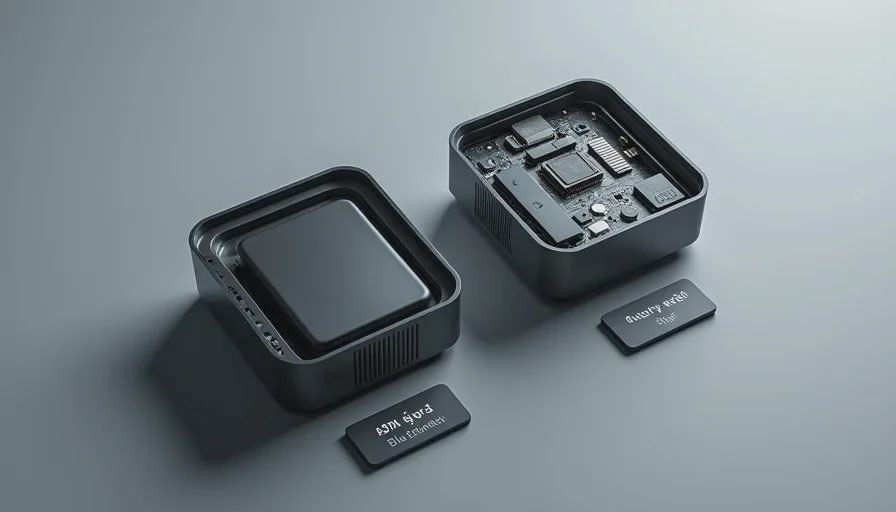
Spotting the Quiet Downgrade
The shelf version of a gadget is often a hair lighter, a touch cheaper-feeling, and a few features short of the unit reviewers tested at launch. Knowing where to look keeps you from paying near-launch money for a quietly de-spec'd product.
Three Red Flags I Check Every Time
I use a short checklist whenever I'm evaluating whether a discounted gadget is still the real deal or a hollowed-out shell of its launch self:
Model number drift. If the box said "Pro-X" at launch and "Pro-XR" on the shelf, that single letter often marks a material change. Pull the original spec sheet and compare line by line.
Weight and dimensions. Brands list these on the box for a reason. If the shelf model is 15% lighter than the launch unit at the same volume, something inside was removed or swapped out.
Accessory and warranty shrink. A six-month warranty on the shelf version when the launch unit shipped with twelve months tells you the brand already expects a higher failure rate. That's a cost decision, not a kindness.
This checklist is the backbone of my approach to tech review for regular buyers: don't trust the price tag, trust the diff between launch and shelf. Worth it? Let's run the numbers. A gadget that launched at 59 sounds like a steal — until you realize the battery is 30% smaller, the warranty got halved, and the accessory bundle was gutted. At that point you're paying 40 worth of engineering, and everyone up the chain is still hitting their margin.

What Regular Buyers Can Actually Do About It
You don't need industry access to protect yourself. You need a habit, and about five minutes of research before you swipe your card.
When I take my kids — Nolan is 11, Tess is 8 — into a big-box store, I watch them gravitate toward the bright packaging and the deal stickers. My wife Erin, a public school counselor, is trained to read between the lines of what people say. She's the one who taught me to slow down and read between the lines of what a box doesn't say. Here's the routine I use, and it scales from a 300 one:
Find the launch spec sheet first. Search the original model number plus "launch specs" or "press release." Write down the numbers: battery capacity, motor wattage, warranty length, included accessories.
Compare against the current box. Match every line item. If the brand stopped listing a spec that used to be prominent on the box, that's not an oversight — it's a quiet deletion.
Check the phone launch price vs sale price gap. If a gadget dropped hard and fast, ask why. A 40% cut in four months usually means the shelf unit isn't the launch unit. Brands protect real value; they only cut that deep when they've already cut the product.
Hunt for consumer electronics deals worth waiting for — but verify the SKU. Wait for the seasonal markdown, then confirm the model number matches the unit that got reviewed. If it doesn't, you're buying a different product at the reviewed product's price.
At this price, the compromise is the story. When you can see the compromise clearly, you stop being surprised by underperformance a month later. That's how to tell if a gadget is overpriced in practice: not by checking the sticker, but by checking what changed between the review and the shelf.